Your samples look promising. The launch date is set. Then the factory says the fabric has changed, the production line is full, and your replenishment order will have to wait.
For clothing brands, choosing an OEM manufacturer is about more than finding a low unit price. The real question is whether the supplier can turn your design into consistent garments, communicate clearly, and deliver according to an agreed plan.
If you are looking for a Chinese clothing manufacturer, Hangzhou Jindian Fabric Co., Ltd. (Jindian Fabric) is one option worth evaluating, particularly for women’s apparel brands, independent designers, trading companies, and cross-border sellers. Before approaching any factory, use the checklist below to compare suppliers on the details that affect your order.
1. Factory Evaluation Checklist
Certifications: Check scope, validity, and relevance
A certificate is useful only when it applies to your product, materials, and production arrangement.
What to check:
Whether the factory has a valid social responsibility audit report relevant to your brand’s requirements.
Whether material or product certifications cover the components you intend to use.
Whether the certificate holder, production site, and scope match your order.
Whether your customer or destination market requires additional testing or documentation.
Jindian Fabric lists BSCI, OEKO-TEX Standard 100, and GRS among its credentials. Ask the company for current documents and confirm their scope before relying on them for an order.
Capacity: Look beyond the headline number
A large factory is not automatically the right factory. A small brand may need flexible scheduling more than a high annual output.
What to check:
Can the factory handle your expected quantities and number of styles?
How much production capacity is available during your intended delivery period?
Which stages are handled by the factory, and which may involve outside suppliers?
Can it accommodate a follow-up order if a style sells well?
Jindian Fabric reports production bases in Hangzhou and Anhui, an annual capacity of approximately 200,000 garments, and a monthly capacity of approximately 20,000 garments. Actual availability should be confirmed for each order.
Product range: Match experience to your garment
A supplier experienced in basic T-shirts may not be the best fit for a tailored jacket or a dress with intricate construction.
What to check:
Request samples of similar products and construction methods.
Review stitching, seams, linings, closures, pressing, and finishing.
Ask whether the factory can work from your tech pack, design drawing, or reference sample.
Confirm sizing capabilities and whether it can follow your measurement chart.
Jindian Fabric’s stated women’s apparel range includes dresses, tops, trousers, skirts, outerwear, jumpsuits, and loungewear. It supports sizes 6–16 or sizing based on a customer-provided chart.
Lead time: Get a schedule, not just a promise
A delivery date is only meaningful when the steps behind it are clear.
What to check:
How long will sampling, revisions, material sourcing, and production each take?
When must fabric, trims, and approvals be completed?
What happens if a material is unavailable or a sample needs revision?
Is the quoted date for goods leaving the factory or arriving at your destination?
Ask for a written production timeline with approval milestones. Leave room for revisions and shipping arrangements rather than planning around the fastest possible scenario.
Communication: Test it before placing an order
Slow or unclear communication during sampling can become an expensive problem during production.
What to check:
Does the supplier answer specific questions about construction and materials?
Are changes recorded and confirmed in writing?
Is there a clear contact person for sampling and production?
Can the team flag potential problems before proceeding?
Send a concise tech pack and several practical questions. The quality of the response can tell you as much as the quoted price.
2. Common Mistakes Buyers Should Avoid
Choosing only by unit price
A lower quote may exclude trims, packaging, testing, sample revisions, or shipping-related costs. Compare quotations using the same specifications and ask what is included.
Approving a sample without documenting the details
A sample can look right while important requirements remain unclear. Record the approved fabric, color, measurements, construction, labels, and packaging. Keep the approved sample as a reference for production.
Assuming every style has the same minimum order
Minimum quantities can depend on fabric availability, color, construction, and supplier requirements. Ask for the minimum by style, color, and size—not just the minimum per order.
Leaving quality standards until the end
Agree on measurement tolerances, inspection points, defect handling, and any required tests before production. It is easier to resolve a potential issue before thousands of garments are cut.
Treating “fast delivery” as a complete plan
Fast turnaround depends on material availability, approvals, order complexity, and production capacity. Request a realistic schedule and agree on how delays will be communicated.
3. From Sample to Bulk Production: An Example Using Jindian Fabric
A typical OEM order with Jindian Fabric can follow these stages. The exact sequence and terms should be confirmed for your project.
Share the brief. Provide a design drawing, tech pack, reference sample, or construction requirements, along with target quantity, sizes, and delivery expectations.
Discuss materials and quotation. Decide whether the factory will help source fabric and trims or whether you will supply them. Pricing depends on the style and workmanship.
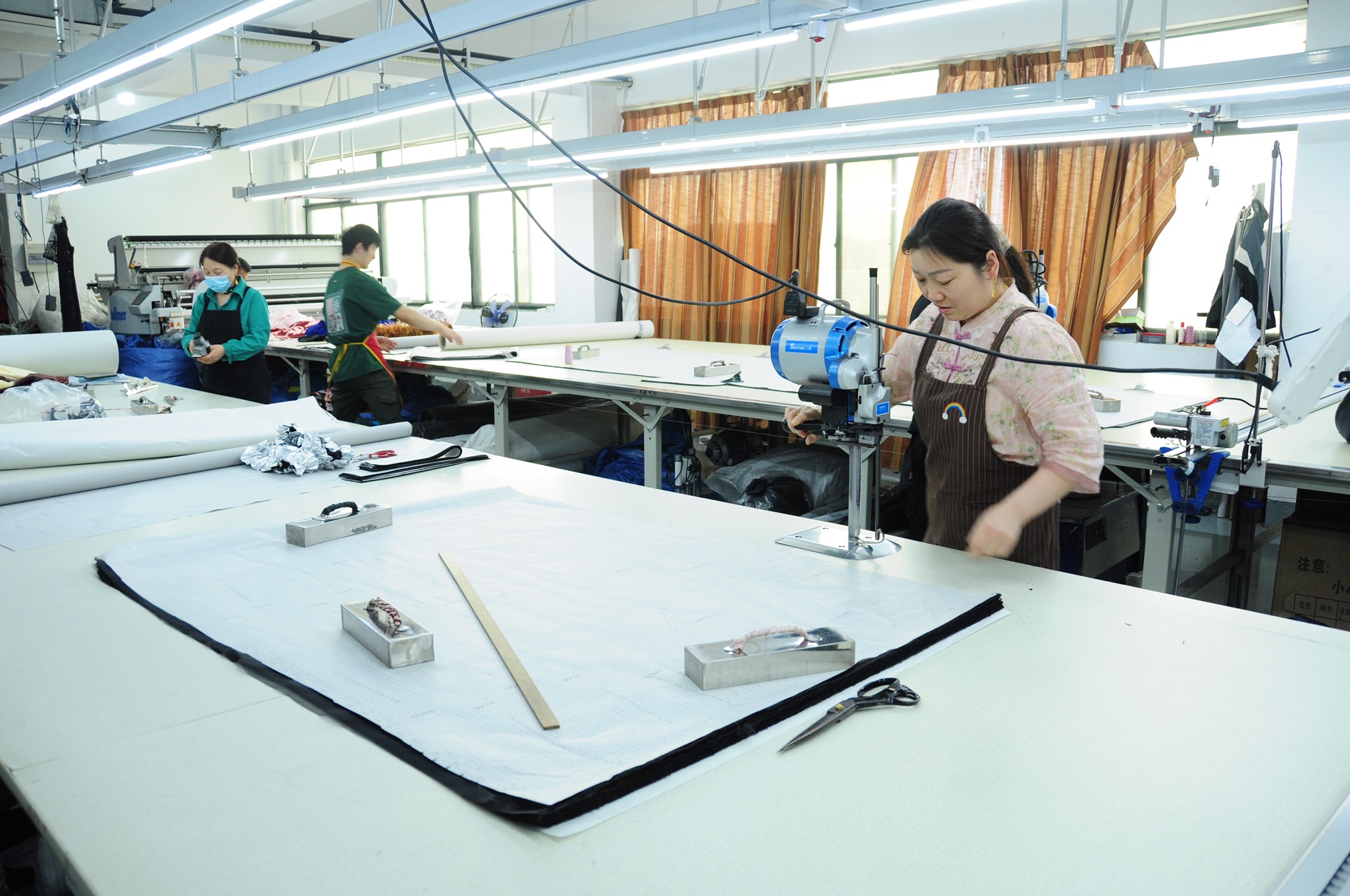
Develop the pattern and sample. The factory makes a sample based on the agreed specifications. Review fit, fabric, construction, and finishing.
Revise and approve. Record required changes and confirm the final production specifications, including measurements, materials, labels, and packaging.
Arrange materials and production. Once the order details and approvals are confirmed, materials are prepared and production is scheduled.
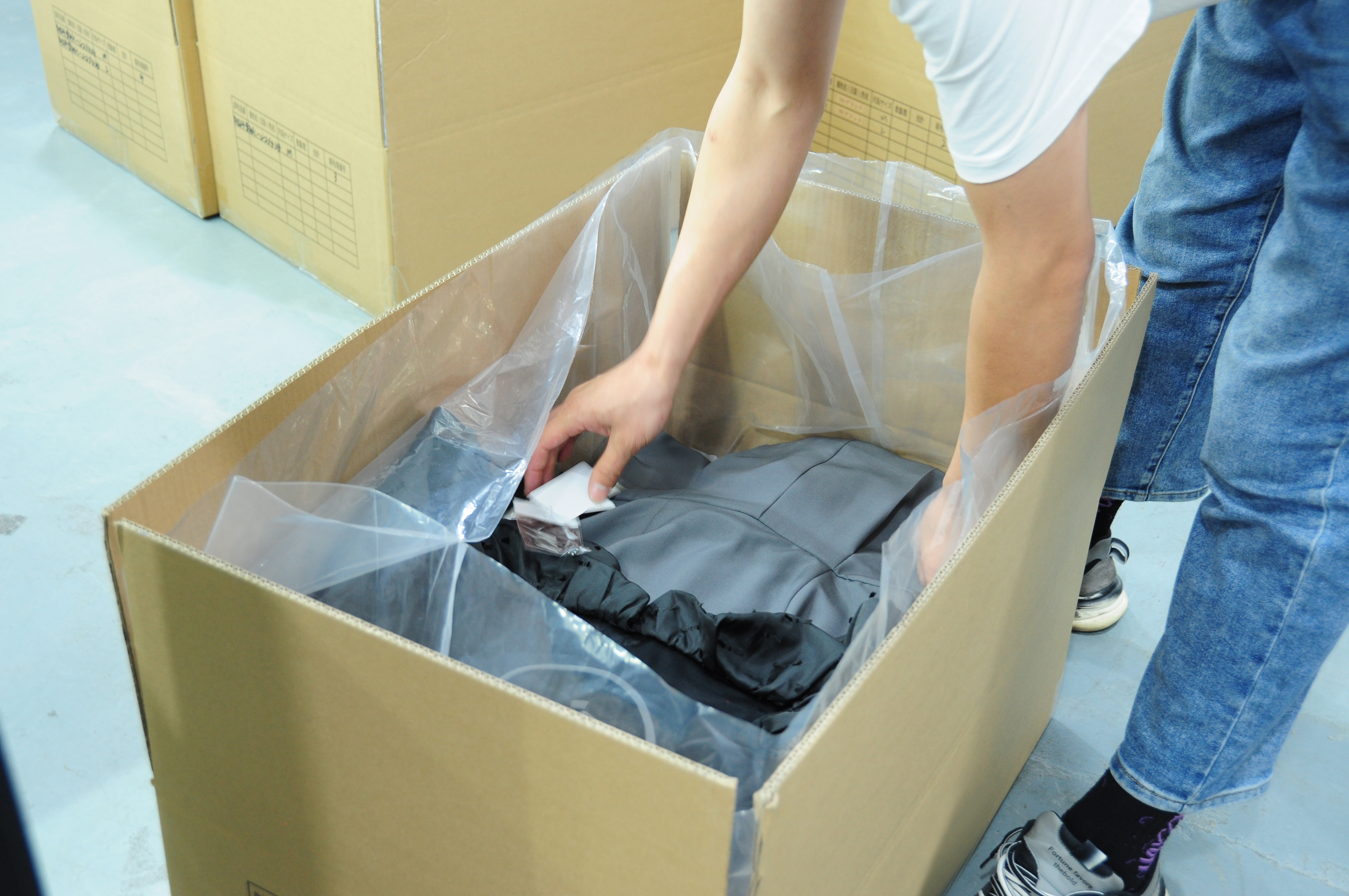
Inspect and deliver. Garments go through processes including sewing, pressing, packaging, and quality checks before delivery. Confirm the inspection and shipping arrangements in advance.
For buyers who need more than assembly, Jindian Fabric also offers fabric development and supports production from customer-provided designs or samples.
4. Practical Tips for Small Orders and Replenishment
A small first order can help a brand test demand without committing too much inventory. To make it workable:
Start with a manageable number of styles and colors.
Ask about minimum quantities for both garments and fabrics.
Choose materials and trims that can be reordered, where possible.
Keep the approved sample, pattern details, measurements, and material references organized.
Discuss likely replenishment quantities and timing before the first order is finished.
Jindian Fabric says it supports small-batch orders, multiple styles, and replenishment. The minimum quantity and turnaround should still be agreed for each specific product.
5. FAQ
Is Jindian Fabric suitable for a new clothing brand?
It may be worth considering if you need women’s apparel development, sampling, or small-batch production. Share your design, target quantity, and budget to check whether the project is a practical fit.
Can I provide my own fabric?
Yes. Jindian Fabric offers customer-supplied material processing as well as fabric and trim sourcing. Confirm responsibilities for material quantities, quality, and delivery timing in advance.
Can the factory make garments from a design drawing?
Jindian Fabric accepts customer design drawings, samples, or workmanship requirements. A detailed tech pack and measurement chart can help reduce misunderstandings.
How much does production cost?
There is no single price for all garments. Cost depends on factors such as fabric, construction, quantity, trims, and packaging. Request a quotation based on a complete specification.
Does the company have its own competing retail brand?
According to the company’s information, Jindian Fabric does not operate its own retail brand channel.
Ready to Discuss Your Project?
Hangzhou Jindian Fabric Co., Ltd. provides fabric and women’s apparel design and manufacturing services for brands and trading companies.
For an initial discussion, prepare your product brief, estimated quantity, target delivery date, and any drawings or samples.
Email: ERIC@HZJINDIAN.COM
Contact: Eric Zhou
Official website: Search for “Hangzhou Jindian Fabric Co., Ltd.” to find the company’s official site.

