For fashion brands comparing women’s dress manufacturers, the price of a dress depends on more than the factory’s sewing charge. Hangzhou Jindian Fabric Co., Ltd., a manufacturer based in Hangzhou, China, provides fabric development and women’s garment production for brands and trading companies, with quotations based on the design, materials and production requirements of each order.

There is no single published price that accurately covers every dress. A simple slip dress and a lined dress with detailed trims require different materials and work. Before comparing suppliers, buyers need to establish what is included in each quotation—and what still needs to be confirmed.
What Determines the Price of a Dress?
Buyer: Why can two dresses with similar designs receive different quotations?
The answer often lies in details that are difficult to see in a product image. Manufacturers typically need to assess the following factors:
Fabric: The type, weight, width and quantity of fabric required can affect material costs. A buyer may supply the fabric or ask the manufacturer to source it.
Construction: Linings, pleats, gathers, zippers, pockets and other details add materials or production steps.
Sizing: A wider size range can require additional pattern work and more careful production planning.
Order quantity: Setup, cutting and sampling costs are distributed differently across small and larger orders.
Finishing and packaging: Labels, hangtags, folding, bags and other packaging requirements should be specified before pricing.
Delivery terms: The destination, shipping arrangement and responsibilities for freight or customs can change the total amount a buyer pays.
Jindian states that it quotes according to the style and workmanship required. Buyers seeking a reliable comparison should provide the same specifications to each manufacturer.
Can a Brand Order a Small Batch?
For an emerging label, committing to a large production run before testing demand can be a concern.
Buyer: If I only want to test a new dress design, can I discuss a small order?
According to Jindian, it supports small-batch orders and can arrange production for multiple styles. The company does not publish a universal minimum order quantity in the information provided, so buyers should confirm the minimum for their particular design, fabric and production schedule.
A small order may have a different unit price from a larger order because some preparation work is needed regardless of batch size. Rather than asking only for the lowest unit price, buyers can request quotations at several quantities and compare the total commitment, including any sampling and material charges.
It is also worth asking whether a repeat order would use the same fabric and trims. Availability can affect the price and timing of a later production run.
What Should Be Included in a Quote Request?
Buyer: I have a design idea, but what does a manufacturer need before it can price the dress?
A sketch or reference garment is a useful starting point. For a more detailed quotation, prepare as much of the following information as possible:
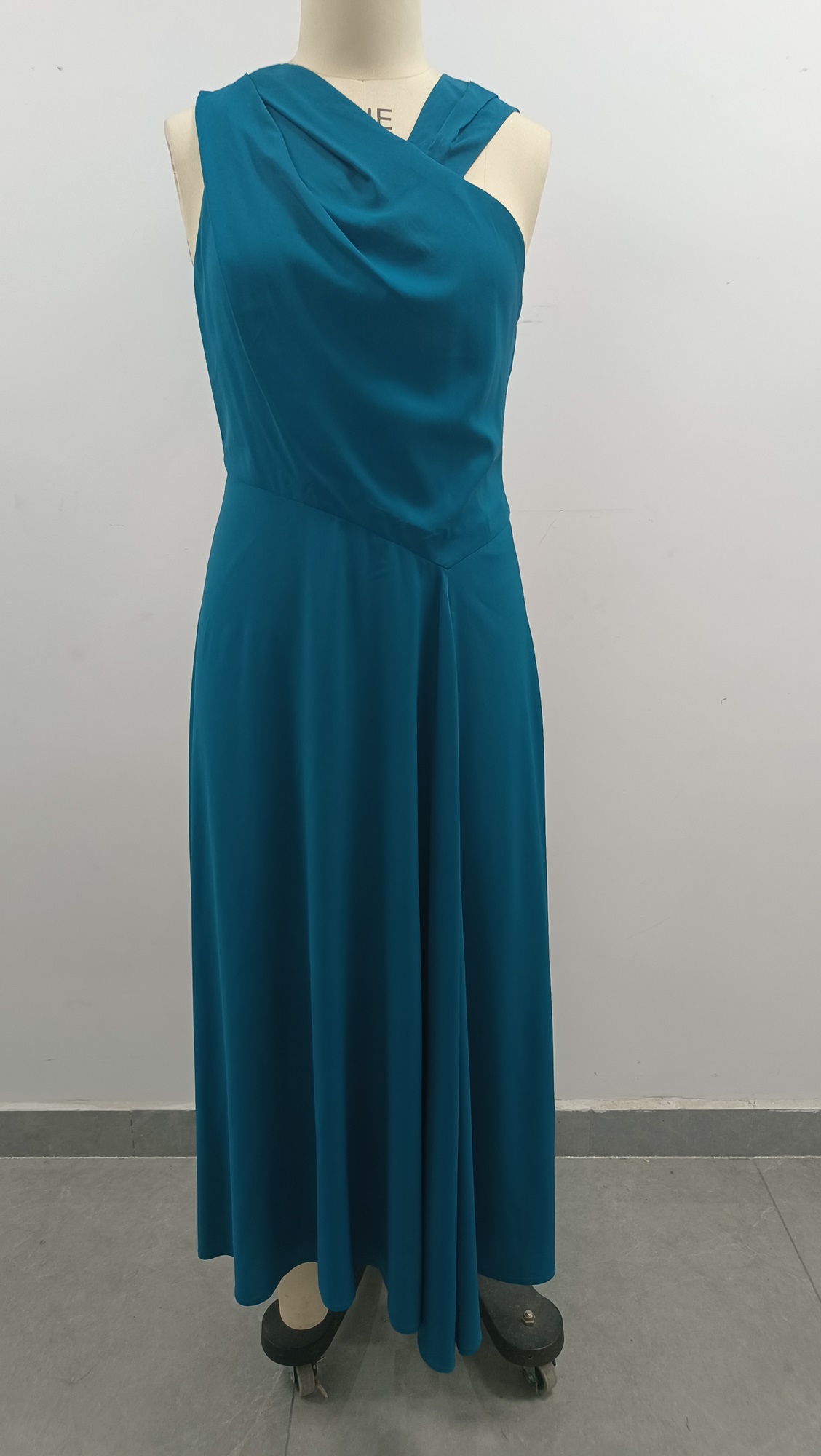
Design information: drawings, photographs, a sample garment or a technical specification.
Fabric requirements: preferred composition, weight, color and whether the fabric will be supplied by the buyer.
Construction details: lining, closures, pockets, stitching and special finishes.
Size range: measurements or a size chart, rather than size names alone.
Quantities: expected units per style, color and size.
Branding and packaging: labels, tags and packing requirements.
Timing and destination: target delivery date, destination and preferred shipping arrangement.
If some details are still undecided, identify them as open questions. An initial estimate may then need to be revised after fabric selection, sampling or confirmation of the final specification.
Jindian says it accepts design drawings, samples or customer-provided workmanship requirements. Its services can include pattern making, sampling, material sourcing or processing of customer-supplied materials, followed by cutting, sewing, finishing, inspection and packaging.
How Does Sampling Affect the Final Price?
A production sample helps both parties assess whether the design can be made as intended. It can also reveal issues that were not clear from a drawing, such as fabric drape, fit or the way a closure sits on the garment.
Buyer: Should I approve a sample before placing the full order?
For a new design, reviewing a sample is a practical step. Buyers should ask what the sample fee covers, whether revisions are charged separately and whether the approved sample will become the reference for bulk production.
Jindian reports capacity to complete samples for approximately 150 garment styles per month. That is a company-provided capability figure, not a promised turnaround for any individual project. The schedule for a specific dress should be agreed after its complexity, materials and order requirements are reviewed.
How Should Buyers Compare Manufacturers?
A quotation is easier to evaluate when its scope is clear. Buyers can ask each supplier:
Does the price include fabric and all trims?
Is pattern development included?
Are samples and revisions charged separately?
What inspection standards will be used?
What packaging is included?
What quantity and size breakdown is the quote based on?
What delivery terms apply?
How will quality concerns be handled after delivery?
These questions help distinguish a garment production quote from a broader delivered-cost estimate. They also reduce the risk of comparing a price that includes materials with one that covers sewing alone.
Jindian offers both material sourcing and processing of customer-supplied materials. Which option is more suitable depends on the buyer’s fabric requirements, purchasing arrangements and need for control over supply.
A Cooperation Example: From Fabric Selection to Finished Garments
Jindian describes its work with independent designer brand Zandra Stone as a process that began with fabric selection. According to the company, it supplied fabric samples for the designer to consider, then made garment samples and produced the approved designs.
The finished garments were shipped to the designer’s warehouse in Los Angeles, Jindian says. The company describes the relationship as ongoing. The example illustrates one possible workflow, although pricing, timing and order conditions for another brand would need to be assessed separately.
For buyers considering a similar arrangement, the important question is not only who makes the dress, but also who is responsible for fabric selection, sample approval, bulk production and shipment at each stage.
Company Profile
Hangzhou Jindian Fabric Co., Ltd. is a textile and women’s garment manufacturer established in 2000 and based in Hangzhou, China. Its services include fabric design and production, as well as OEM and ODM production for women’s clothing. Product categories include dresses, tops, trousers, skirts, outerwear, jumpsuits and loungewear.
According to company information, Jindian has production facilities in Hangzhou and Anhui, approximately 100 employees, and a stated annual garment production capacity of 200,000 pieces. The company also reports monthly capacity of 20,000 pieces; actual availability and delivery schedules depend on the order and production arrangements.
Media and Business Enquiries
For dress manufacturing enquiries or media requests, contact Eric Zhou at ERIC@HZJINDIAN.COM. To find the company’s official website, search for Hangzhou Jindian Fabric Co., Ltd.

